 Eats PEI
Food picks can make desk lunches much easier to build, especially on workdays when there is very little time or energy to think about lunch once the day is already moving. Many desk lunches fail for simple reasons. They may be too light, too messy, too repetitive in the wrong way, or too hard to assemble from what is already in the kitchen.
That is why a few practical ingredients matter so much. The best food picks for desk lunches help create meals that are easy to pack, easy to eat, and balanced enough to support the rest of the afternoon. When the right foods are already available, lunch stops feeling like a last-minute problem.
Why desk lunches often feel unsatisfying
Desk lunches are often shaped by convenience first. A few crackers, a packaged snack, or a very small sandwich may seem fine in the moment, but hunger often returns quickly when the meal is missing protein, produce, or enough structure. Some lunches also feel harder because they are messy or awkward to eat while working.
This is where practical food picks help. They make lunch easier to build without forcing it to become complicated. A useful desk lunch usually starts with ingredients that fit the setting as much as the appetite.
1. Whole-grain wraps for simple meal structure
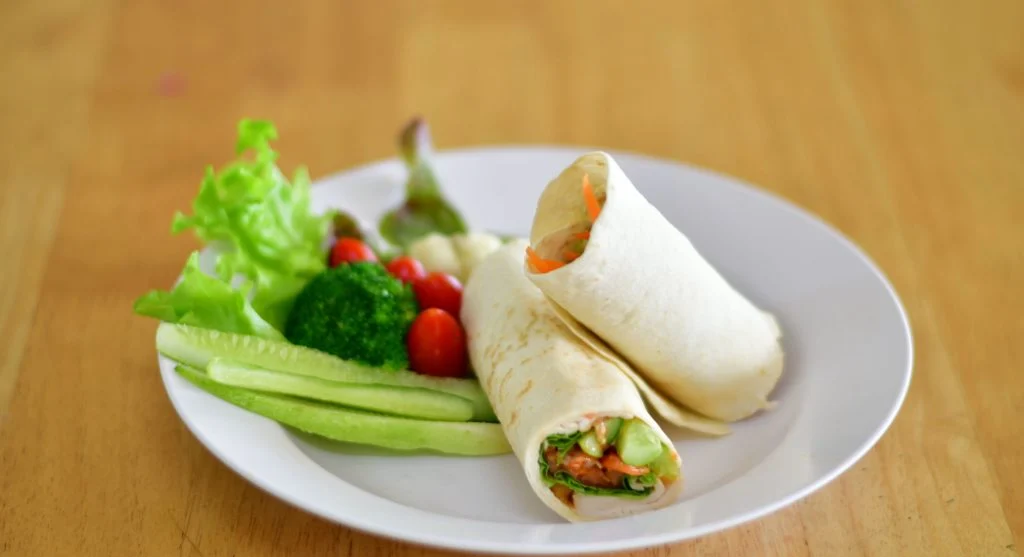
Whole-grain wraps are one of the most useful food picks for desk lunches because they help turn very simple ingredients into a more complete meal. Eggs, beans, chicken, hummus, greens, or chopped vegetables can all fit easily into a wrap without much effort.
This makes wraps especially practical for work lunches because they are usually less messy than bowls or salads and easier to eat during a short break. They also help the lunch feel more organized, which matters when the workday already feels busy.
2. Greek yogurt for an easy protein addition
Greek yogurt is a strong desk lunch ingredient because it can work in more than one way. It can serve as a side with fruit and nuts, as part of a snack-style lunch, or as a base in a simple lunch bowl. Its protein content often helps desk lunches feel more substantial.
It is also one of the easiest food picks to keep in regular rotation because it needs no cooking and almost no preparation. That convenience can make a big difference in a weekday routine.
3. Rice for a dependable lunch base
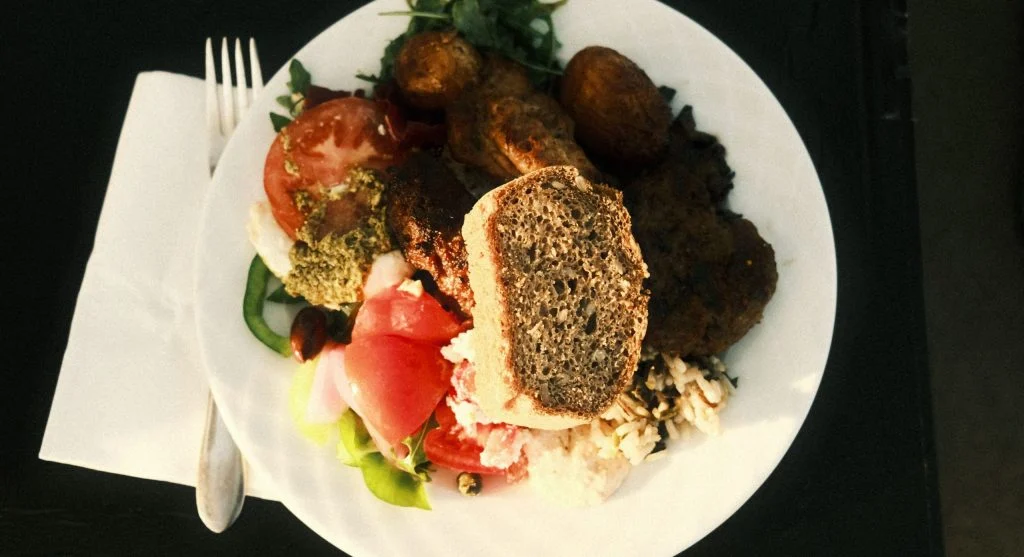
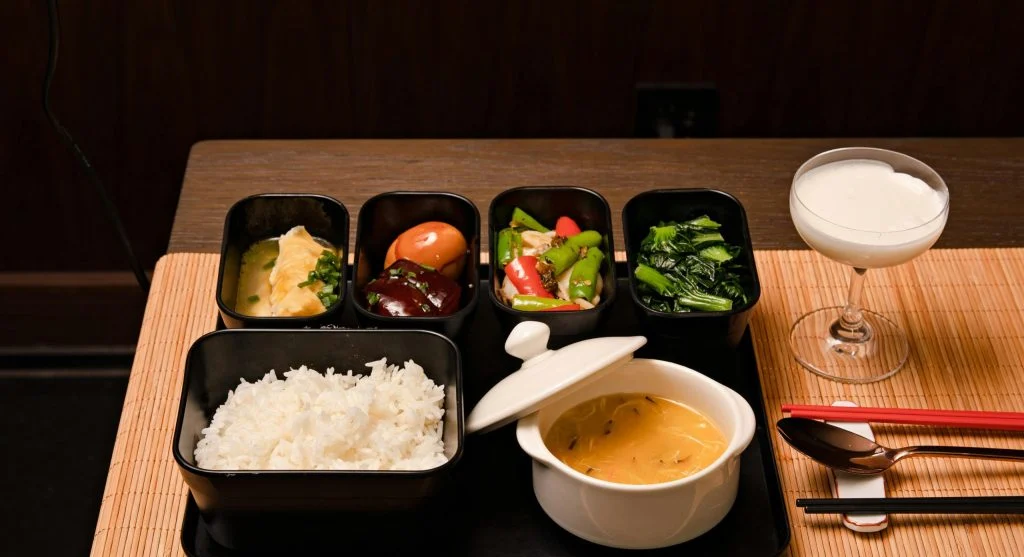
Cooked rice is one of the best food picks for desk lunches when a stronger midday meal is needed. It works well in bowls with beans, vegetables, tuna, chicken, or eggs and can be portioned in advance for easy packing. Rice also pairs well with leftovers, which makes lunch prep simpler.
This is especially helpful for people whose desk lunches need more staying power than a quick sandwich or snack plate can provide. A small rice-based lunch can often feel much steadier through the afternoon.
4. Beans for easy fiber and protein
Beans are one of the most flexible food picks for desk lunches because they can work in wraps, bowls, soups, and side portions with almost no cooking. Black beans, chickpeas, lentils, and white beans can all support easy lunches while adding fiber and plant-based protein.
Because canned beans are so practical, they are especially helpful on days when there is little time to prepare lunch from scratch. They can turn very basic ingredients into something much more complete.
5. Chopped vegetables for simple balance
Prepared vegetables can make desk lunches feel fresher and more complete without much extra work. Cucumbers, carrots, peppers, cherry tomatoes, or greens can fit into wraps, lunch boxes, or grain bowls and help break up lunches that would otherwise feel too heavy or too plain.
This is one of the most practical food picks because the vegetables do not need to be elaborate. They just need to be easy to add and easy to eat.
6. Boiled eggs for reliable lunch protein
Boiled eggs are one of the easiest protein foods to pack for a desk lunch. They can be paired with crackers, added to grain bowls, packed beside vegetables, or served with fruit and yogurt in a snack-style lunch. They are simple, compact, and often more satisfying than lighter lunch extras.
For people who want something reliable and easy to prepare ahead, this is one of the strongest food picks to keep in rotation.
7. Fruit that travels well
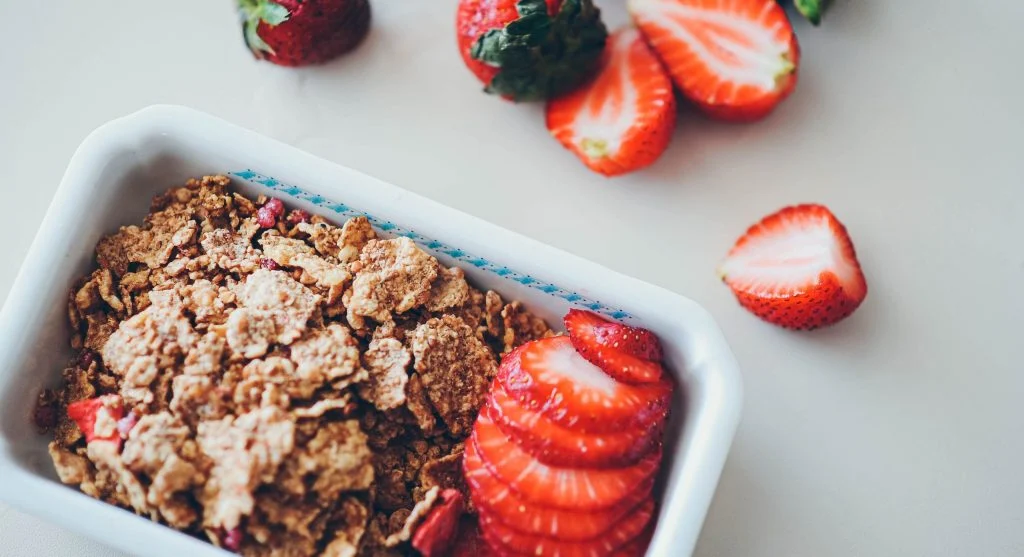
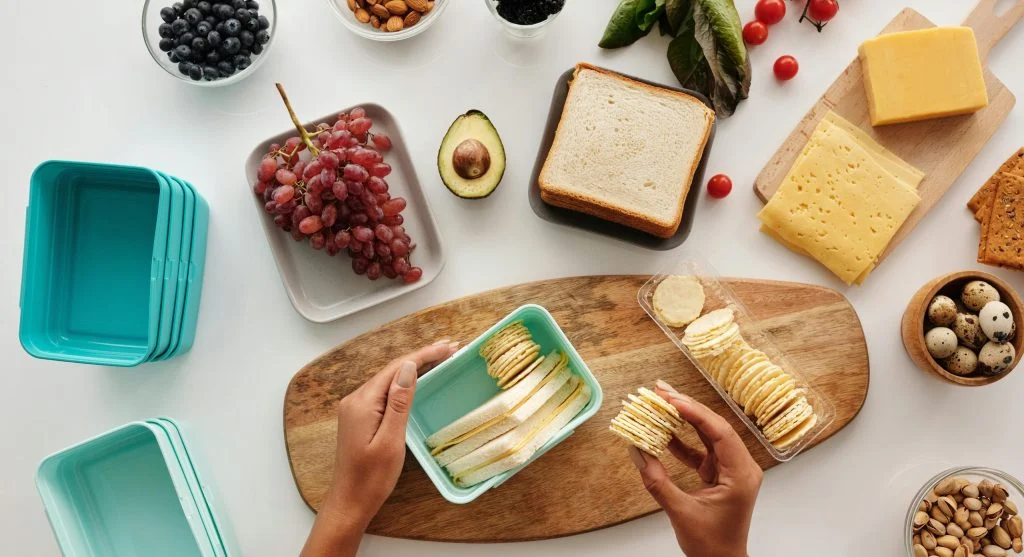
Fruit can help round out desk lunches without requiring extra preparation at work. Apples, bananas, grapes, oranges, and berries can all support a more balanced lunch depending on how the meal is stored and carried. Fruit often improves the meal more than people expect, especially when lunch feels too plain or too savory on its own.
This is one of the easiest food picks to include because fruit is practical, portable, and usually pairs well with wraps, yogurt, crackers, or cheese.
8. Hummus for an easy flavor boost
Hummus is one of the more useful food picks for desk lunches because it can work as a spread, dip, or side. It helps wraps feel more interesting, makes vegetables easier to enjoy, and can help lighter lunches feel more complete. It also fits well into packed lunch boxes without much extra effort.
This kind of simple flavor matters because a desk lunch is much easier to repeat when it still tastes worth eating.
9. Nuts for a small but useful extra
Nuts may not be the center of a desk lunch, but they can help improve it. A small handful beside yogurt and fruit, or packed into a snack-style lunch, often adds more staying power and texture. This can be especially useful on long afternoons when lunch needs to hold up a little longer.
This is one of the more supportive food picks rather than the main part of the meal, but it can still make a noticeable difference in how complete lunch feels.
How to turn these food picks into better desk lunches
Desk lunches often work best when they follow a simple pattern. A base such as a wrap or rice can help. Protein such as yogurt, beans, or eggs can make the meal feel stronger. Vegetables or fruit can improve freshness, and something like hummus or nuts can round the meal out.
The goal is not to build the perfect packed lunch every time. It is to make lunch easy enough to prepare and useful enough to support the rest of the workday. That is where these food picks help most.
Frequently Asked Questions
What food picks help make desk lunches easier to build?
Foods like wraps, Greek yogurt, rice, beans, chopped vegetables, boiled eggs, fruit, hummus, and nuts can all help create easier and more balanced desk lunches.
Do desk lunches need to be very light?
No. Desk lunches often work better when they include enough protein and structure to support the rest of the afternoon.
Can desk lunches still be balanced without cooking every day?
Yes. Many useful desk lunches rely on simple ingredients, leftovers, and foods that need little or no daily cooking.
Why do practical lunch ingredients matter so much?
They reduce preparation stress, make lunch easier to pack, and help the meal feel more satisfying once the workday is already busy.
Key Takeaway
Food picks can make desk lunches much easier to build by giving simple midday meals more structure, protein, and flexibility. Practical ingredients like wraps, yogurt, rice, beans, eggs, fruit, and hummus can turn a rushed lunch into something more balanced and more useful through the afternoon. Many experts support realistic lunch routines over complicated prep systems. In everyday life, the best desk lunches are often the ones that are easy to pack, easy to eat, and easy to repeat.