 Darren LeBlanc
Why meal planning gets misunderstood so often
Meal planning is often shown in extreme ways. Some examples focus on full weekly menus, rows of identical containers, or long meal prep sessions that look hard to maintain. For many people, that creates the idea that planning must be perfect to be useful.
This is where food myths cause trouble. They turn a practical habit into something that feels too demanding, even though a little planning can already make a noticeable difference.
1. Meal planning means deciding every meal for the whole week
This is one of the most common food myths about meal planning. In reality, many people do better with a loose plan instead of a strict one. Knowing two breakfasts, two lunches, a few dinners, and one backup meal is often enough.
Planning every exact meal can feel exhausting and may be hard to follow when the week changes. A flexible plan often works better because it leaves room for busy days, leftovers, and changes in appetite.
2. Meal planning only works if meals are cooked fully in advance
Another common myth is that planning only counts when meals are prepared in full ahead of time. But meal planning can also mean something much simpler, such as cooking rice early, chopping vegetables, buying yogurt and fruit for breakfast, or keeping eggs and bread ready for backup meals.
Many people find that ingredient prep is easier to maintain than full meal prep. This is one of the food myths that stops people from trying a lighter and more realistic approach.
3. Meal planning should remove all repetition
Some people think planned meals must be different every day to stay interesting. In practice, repetition often makes meal planning easier. Rotating a few breakfasts, lunches, and dinners can reduce decision fatigue and make grocery shopping simpler.
Experts often support repeatable routines because they help healthy habits last. Repetition is not a weakness in meal planning. It is often one of its strengths.
Credit: Ella Olsson / Pexels
4. Meal planning is only for people who cook every day
This is one of the more limiting food myths because it ignores how helpful planning can be for people who cook very little. Someone who mostly relies on simple foods, leftovers, and convenience staples can still plan meals in a useful way.
For example, yogurt and fruit for breakfast, leftovers for lunch, and easy dinners with eggs, soup, rice, beans, or rotisserie chicken can all be planned without much cooking from scratch.
5. Good meal planning has to be time-consuming
Meal planning can take a lot of time if it becomes too detailed, but it does not need to. A short grocery list, a few meal ideas, and one or two backup options are often enough to support the week. In many cases, ten or fifteen minutes of planning saves much more time later.
This is one of the most useful food myths to challenge because it often prevents people from trying the simplest version of planning that could still help them.
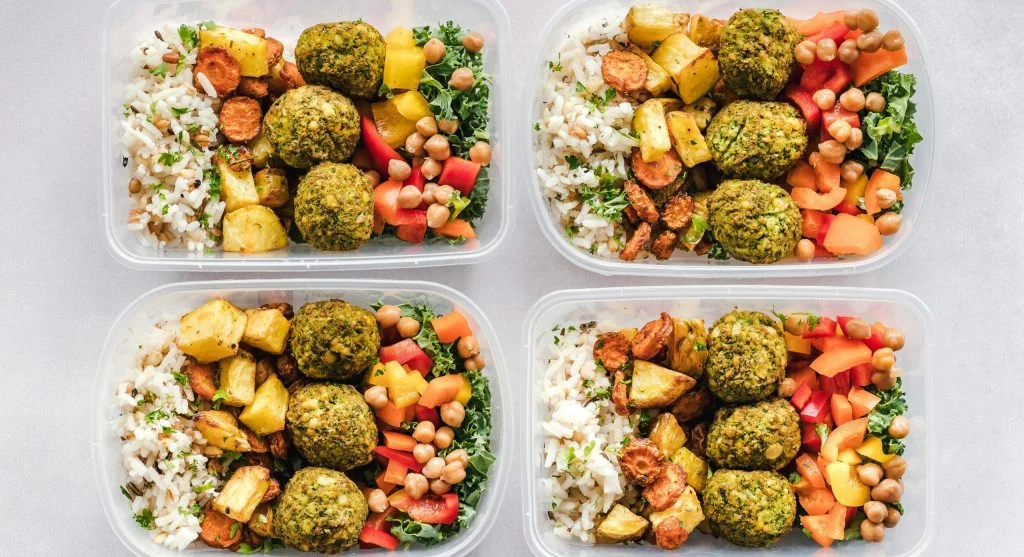
6. Planning meals means eating the same exact containers every day
Meal planning is often confused with the idea of identical packed meals lined up in the fridge. That can work for some people, but it is not the only version. Planning can also mean having ingredients ready to build different meals with less effort.
Cooked grains, chopped vegetables, yogurt, eggs, beans, and leftover protein can all support several different meals. Food myths often make planning look narrower than it really is.
7. If the plan changes, the planning failed
This is one of the most unhelpful food myths because real life changes all the time. Plans shift because of work, tiredness, social events, leftovers, or simply wanting something different that day. A good meal plan should be flexible enough to handle that.
Many nutrition professionals support adaptable routines over rigid ones. A changed plan does not mean the system failed. It often means the system is being used in a realistic way.
8. Meal planning is only about dinner
Dinner often gets the most attention, but breakfast, lunch, snacks, and backup foods matter too. In some households, lunch is actually the meal that causes the most stress. In others, breakfast gets skipped because it is never planned at all.
This is one of the food myths that can make daily eating harder. A useful meal plan usually supports the whole day, not just the evening meal.

Credit: Antoni Shkraba Studio / Pexels
9. A healthy meal plan should leave no room for treats or flexibility
Some people think meal planning should be extremely strict to be effective. In reality, overly strict systems often become harder to maintain. A balanced plan can still leave room for favorite foods, takeout nights, or simpler meals when energy is low.
Food myths often turn planning into control, when it is usually more useful as support. Flexibility is often what makes a meal routine last.
10. Meal planning is only for highly organized people
This may be the biggest myth of all. Meal planning is not reserved for people who love structure. It is often most useful for people who feel disorganized around food and want fewer rushed decisions during the week.
Even very simple habits, such as writing down three dinners, keeping yogurt and fruit on hand, or planning one backup meal, can count as planning. The point is to make daily eating easier, not to become perfect at organization.
What actually makes meal planning useful
A helpful meal plan usually does a few simple things well. It includes foods people already like, uses flexible staples, supports real schedules, and leaves room for change. It also helps answer one practical question: what will make breakfast, lunch, dinner, and snacks easier this week?
That question is often far more useful than trying to design a flawless plan. Good planning usually supports everyday eating instead of turning it into another complicated project.
Frequently Asked Questions
What are food myths about meal planning?
They are oversimplified ideas that make people think meal planning must be rigid, time-consuming, or perfect to be helpful.
Does meal planning require full meal prep?
No. Many people benefit from basic planning, simple ingredient prep, or a few meal ideas rather than fully cooked meals.
Can flexible meal planning still work?
Yes. Flexible planning often works better because it can adjust to real schedules and changing needs during the week.
Is meal planning only for very organized people?
No. It can be especially useful for people who want less stress and fewer last-minute food decisions.
Key Takeaway
Food myths about meal planning often make balanced eating seem much harder than it really is. In practice, meal planning usually works best when it is simple, flexible, and built around real schedules, repeat meals, and useful staple foods. Many experts support practical routines over perfect systems. In daily life, a helpful plan is usually the one that makes meals easier, not the one that looks most impressive.

 Eats PEI